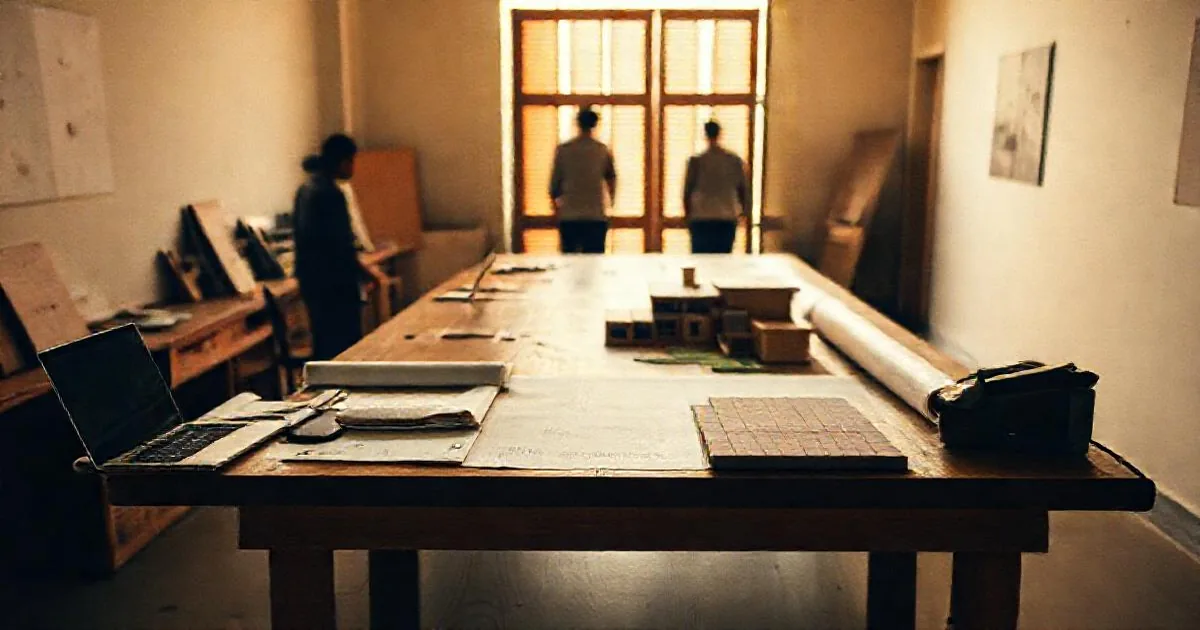
A studio loses an enquiry the way a practice loses a client: quietly. The phone rings while the principal is on site across town. A form is filled at eleven at night by someone comparing three firms. The reply goes out two days later, and by then the drawings have been discussed with someone else. Nobody logs it, nothing looks broken, and the pipeline simply feels thinner than the work deserves.
That is the expensive part. Not the enquiry lost to a better portfolio — the one lost to a slower reply, a form that asked for too much, a website that made a stranger wait. Architecture and design studios are unusually exposed here, because the buying decision is visual, emotional and time-sensitive all at once. This post is about the leaks that happen before the first call, and what to do about them.
The enquiry is not lost on the call. It is lost before it.
Most studio owners assume the sales conversation is where projects are won or lost. In practice the first call is usually a confirmation. By then the buyer has decided you are plausible; what they are testing is whether you understood the brief, whether you have capacity, and whether the fee conversation feels safe.
Everything before that call — the search result, the project page, the loading time, the form, the auto-reply — is doing the persuading. When those pieces are weak, the call never happens, and you never find out why.
Four places the leak usually is
1. The portfolio answers “what does it look like” and nothing else
A render gallery is beautiful and, on its own, almost useless. A buyer comparing studios in Pune is not only asking whether you can design. They are asking: have you handled a narrow plot with a corner exposure, do you manage approvals, what does a project like mine cost, how long does it take, and will I be speaking to you or to a junior.
When a project page shows twelve photographs and no context, the buyer has to email to find out. Some will. Most will open another tab.
Add to every project: location and typology, plot or carpet area where you can share it, the constraint that made the project interesting, and the stage your studio handled. No performance claims, no invented timelines — just the facts of the project.
2. The form asks for a brief before it has earned one
“Upload your drawings, floor plan, budget and timeline” as the first field is a filter, and sometimes a deliberate one. But if the site carries no pricing signal, no process page and no clear next step, that form reads as work. The buyer has not decided yet, and you are asking them to do the pre-sales job for you.
Ask for three things: name, what they are building, and the best way to reach them. Everything else belongs in the call.
3. The site is slow, and slowness reads as risk
A studio website is a portfolio, and portfolios are image-heavy. That is fine. What is not fine is a hero image saved at full resolution, a slider that pulls in four projects at once, and a contact page that needs a plugin to function. On a phone, on a patchy connection, that is the entire first impression.
Compress the images, drop the slider, put the phone number and WhatsApp link in the header. It is unglamorous work, and it is the cheapest enquiry recovery you will do this year.
4. Nobody owns the inbox
This one costs the most and is the easiest to fix. Enquiries arrive by form, by Instagram DM, by WhatsApp, by a call to the number on the site, and by an email forwarded from a friend. Five channels, no owner.
Decide who replies, within what window, and what the first reply says. It does not need to be a proposal. It needs to be one human sentence that confirms the brief, names a time for a call, and asks a single useful question.
A short audit you can run this week
- Submit your own contact form from a phone on mobile data and note how long the confirmation takes to arrive.
- Search your studio name plus “architect in” your locality, and see which page a stranger actually lands on.
- Open your last ten enquiries and check how many received a reply within one working day.
- Read your three strongest project pages and confirm each answers cost, timeline and scope without an email.
- Ask someone outside the industry to find your fee or process page in under a minute.
What a working enquiry path looks like
- A project page that states the brief, the constraint and the studio’s role.
- One form with three fields, plus a visible alternative: phone, WhatsApp, email.
- A confirmation that says what happens next and when.
- A named person accountable for the first reply.
- A short written first-response template the whole team uses.
- A monthly look at where enquiries came from and which ones went quiet.
That is the whole system. None of it is clever. All of it is measurable, and none of it requires a new website — though a website development rebuild is sometimes the faster route if the current site is fighting you.
The handover is where studios still lose
Even studios that fix the site often lose the enquiry at the handover — from the person who saw the form to the person who can answer it. The principal is on site. The junior is unsure whether to quote. The reply waits for a Monday meeting that nobody scheduled.
We built our lead generation service around that specific gap, and the architecture and design studios case study walks through how the enquiry path was restructured for a studio with the same problem. The short version: define the first reply, own the channel, and stop calling a form submission a lead until a person has actually spoken to the buyer.
If you would rather work on demand than on the form, digital marketing can bring the right buyers to the page — but it will not fix a handover that ignores them.
Start with the leak you can see
You do not need a new brand, a new website and a new CRM in the same quarter. Pick the leak closest to the money: the unanswered enquiry. Fix the reply before you fix the funnel.
We take on a limited number of studio engagements each quarter, and the current intake is nearly full. If your enquiry path is leaking, book a consultation and we will walk it end to end with you before you commit to anything.