




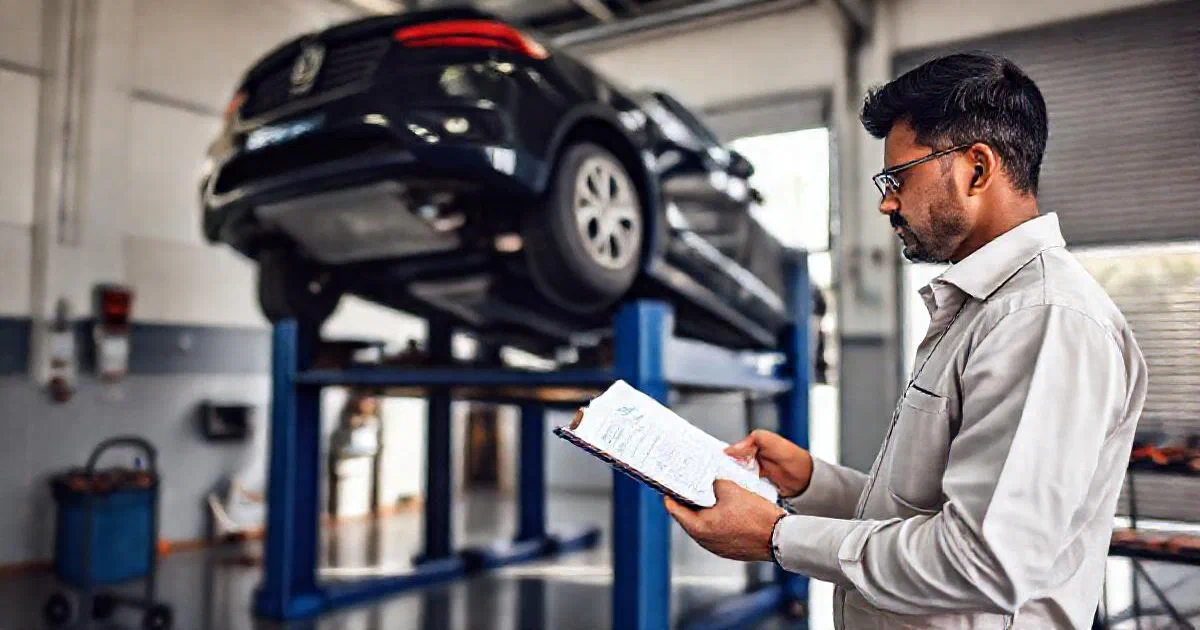

A missed enquiry is not a neutral event. Someone in Pune tapped “Get a quote” on an automotive page, waited, and then opened a competitor’s tab. The cost is not the click you paid for — it is the whole value of a buyer who was already in the market, already holding a budget, and already interested enough to raise a hand. That loss never appears on a dashboard, which is exactly why it keeps happening. With every workshop, dealership and parts supplier in the city now running some form of automotive lead generation, the enquiry you lose is the one your competitor answers. Enquiries have a short shelf life — the buyer comparing three workshops today is not comparing them next month.
The first call is not the first impression
By the time your phone rings, the buyer has already formed an opinion. They have seen your page, tried your form, checked whether you replied, and read whatever your Google listing said. Most automotive businesses treat the first call as the start of the relationship. It is usually the fourth or fifth touch.
The gap between the click and the conversation is where enquiries die. Not in the ad auction, not in the keyword research, not in the creative. In the twenty minutes after somebody decides they are interested.
Four places automotive enquiries leak before the first call
- The form that asks for too much. Registration number, VIN, service history, budget band, preferred slot — all before a name and a phone number. Every field is a small tax on intent, and a buyer who is still deciding will not fill in something that looks like an insurance claim.
- The quote button with no quote behind it. A button labelled “instant quote” that opens a mail client, or dumps the buyer on a thank-you page with no price and no timeframe, teaches them that your instant is not.
- The after-hours silence. Enquiries arrive when people have time to think — evenings, Sundays, the middle of a service interval. If nobody acknowledges them until the next working morning, the buyer has already spoken to someone else.
- The page that answers a different question. A buyer searching for a specific repair, part or service lands on a generic page about the company. Reassuring, but not an answer. They go back and click the next result.
Nobody owns the enquiry
In most automotive businesses the website belongs to marketing, the phone belongs to the sales team, and the inbox belongs to whoever checks it. An enquiry has to cross all three to become a conversation. Any one of them can drop it, and none of them sees the whole path.
That is why the same argument keeps surfacing: sales says the leads are poor quality, marketing says sales never follows up, and neither side can fix it alone. Naming one person as the owner of the enquiry — from submission to first call — is unglamorous and usually the highest-leverage change available.
What the buyer is doing at nine in the evening
They are not loyal yet. They are comparing a workshop in Kothrud against one in Hadapsar, a dealer quote against an independent garage, a new part against a refurbished one. They will check reviews, look at photographs of the workshop floor, and try to work out whether the price on the page is the price they will pay. They are on a phone, possibly on a slow connection, and they will give your page about as long as it takes to decide whether it understands their problem.
Two things matter in that window: does this business look like it can do the job, and how quickly will somebody reply. Everything else is secondary.
Fixes that cost less than a bigger ad budget
- Replace the long enquiry form with three fields — name, phone, what the vehicle needs — and ask the rest on the call.
- Put a phone number and a WhatsApp option above the fold on every service page.
- Write an auto-acknowledgement that states what happens next and when, and make sure it is true.
- Give each service page one job: answer the question in the search, then offer the next step.
- Track form starts, not just form submissions. The drop-off tells you which field is costing you.
None of this needs a new campaign. It needs the page, the form and the follow-up to agree with each other — which is mostly a website development problem before it is a marketing one.
Measure the gap, not the traffic
Most automotive lead generation reporting stops at sessions and clicks. That tells you whether people arrived, not what happened after they did. The useful numbers sit closer to the enquiry: how many forms were started and abandoned, how long between submission and first human contact, how many enquiries never got a reply at all.
When we rebuilt the enquiry flow for Kiran Motors, a multi-brand service workshop on the Pune–Satara road, the first change was not the ad account. It was the form and the acknowledgement message. Deccan Auto Care, a parts and accessories retailer in the city, had the opposite problem — a short form and a slow reply. Same leak, different end of the pipe.
For the fuller picture of how we approach this sector, the automotive case-study block lays out the vertical, the sub-industries and the searches buyers actually use.
Where to start
Start with the leak, not the budget. Scaling automotive lead generation on top of a leaking funnel only buys you more of the same loss. A lead-generation audit will tell you whether your enquiries are dying in the form, in the inbox, or in the follow-up. If the answer turns out to be the site itself, that is a website conversation. If it is the volume of the wrong kind of enquiry, it is a digital marketing one.
We run a limited number of these audits each month so that the person doing the work is the person on the call — and this month’s slots are nearly gone. If your enquiry flow is leaking, book a consultation before the queue rolls over. Bring your last twenty enquiries; the pattern usually shows up early.