
Table of Contents
- Introduction
- Understanding AI Decision-Making
- Human Judgment in Decision-Making
- Comparing AI Safety with Human Judgment
- Advantages of AI Decision-Making
- Risks and Limitations of AI Decision-Making
- Case Studies: AI vs. Human Judgment
- Ethical and Practical Implications
- The Role of Regulation and Oversight
- Future of Safe AI Decision-Making
- Conclusion
Introduction
Artificial Intelligence (AI) has rapidly evolved into a critical tool for decision-making in areas ranging from healthcare to finance and even employment. With algorithms capable of processing massive datasets at lightning speed, many organizations are now asking: Is AI decision-making safer than human judgment, or does it carry unique risks?
Studies published in Frontiers in Artificial Intelligence highlight that AI systems can both enhance and complicate decision-making processes. At the same time, human judgment has historically been central to ethical, emotional, and nuanced choices. This raises an essential question: how do we balance the efficiency of AI with the reliability and adaptability of human reasoning?
To understand this balance, we must explore both the strengths and shortcomings of AI and human decision-making, considering safety, ethics, and long-term consequences.
Understanding AI Decision-Making
AI decision-making refers to the use of algorithms and machine learning models to analyze data, recognize patterns, and provide outcomes or recommendations. According to research published in the National Center for Biotechnology Information (NCBI), AI can outperform humans in tasks that require large-scale pattern recognition, such as medical imaging diagnostics and financial fraud detection.
For example, deep learning models can process millions of medical scans with near-perfect accuracy, a task no single human could achieve. Similarly, AI in finance can flag fraudulent transactions within milliseconds, helping reduce economic risks.
However, these systems are often black boxes — meaning their decision-making process is not easily interpretable. While AI may provide accurate results, it can lack transparency and accountability, making it difficult to assess whether a decision was made safely or ethically.
Human Judgment in Decision-Making
Human decision-making is guided by experience, intuition, cultural understanding, and ethical values. Unlike machines, humans are capable of considering context and emotional nuance.
For instance, a doctor deciding whether to recommend aggressive treatment for a patient doesn’t only rely on lab results but also factors in the patient’s emotional state, family situation, and preferences. This type of holistic judgment is something AI struggles to replicate.
But humans also have limitations. Research in PMC studies on cognitive biases reveals that human decision-making is often influenced by personal biases, stress, fatigue, and incomplete information. These limitations can lead to errors, sometimes with life-threatening consequences.
Comparing AI Safety with Human Judgment
When comparing the safety of AI and human decision-making, several dimensions must be considered:
Accuracy: AI often surpasses humans in tasks requiring precision.
Bias: Both AI and humans suffer from bias, though AI’s biases usually stem from data quality, while human biases are rooted in psychology and culture.
Transparency: Human reasoning is explainable, whereas AI algorithms are often opaque.
Adaptability: Humans excel in novel or ambiguous situations; AI struggles without structured data.
For example, in medical diagnostics, AI has shown higher detection rates for certain cancers than physicians. Yet, if data is flawed, AI may misdiagnose in ways no human would. On the other hand, humans may misdiagnose due to fatigue or oversight. Thus, safety depends on context and integration of both approaches.
Advantages of AI Decision-Making
AI provides several benefits over human judgment in decision-making processes:
Speed and Efficiency – AI processes massive datasets in seconds.
Consistency – Unlike humans, AI doesn’t suffer from fatigue.
Scalability – AI can operate across industries simultaneously.
Predictive Insights – AI can anticipate outcomes based on historical data.
Objectivity – When trained properly, AI avoids emotional influence.
A study on genomics and AI shows that AI-driven decision-making has accelerated genetic discoveries, proving its potential in scientific breakthroughs.
Risks and Limitations of AI Decision-Making
Despite its strengths, AI carries significant risks:
Bias from Training Data – AI reflects the biases in its datasets.
Lack of Explainability – Decisions are often made without transparent reasoning.
Ethical Concerns – AI can inadvertently cause discrimination in hiring, lending, or law enforcement.
Over-Reliance – Blind trust in AI can lead to catastrophic failures.
These risks echo broader ethical concerns about AI where automation intersects with fairness and justice.
Case Studies: AI vs. Human Judgment
Case Study 1: Healthcare Diagnostics
AI systems like IBM Watson have demonstrated remarkable accuracy in identifying cancer patterns. In some trials, AI outperformed oncologists in early detection. However, false positives and lack of contextual awareness created risks. A human doctor, by contrast, may miss patterns but better considers patient context.
Case Study 2: Hiring and Recruitment
AI-driven hiring tools once screened applicants at Amazon but were later abandoned due to gender bias in data. Human recruiters, while subjective, can adapt their judgment to avoid systematic discrimination when trained on ethical practices.
Case Study 3: Autonomous Vehicles
AI in self-driving cars must make split-second life-and-death decisions. While AI reacts faster than humans, ethical dilemmas such as “who to save” in an unavoidable crash remain unresolved.
Ethical and Practical Implications
The reliance on AI raises profound ethical questions. Should we trust machines with life-changing decisions in healthcare, justice, or employment?
Articles from Frontiers in AI emphasize that safe AI must integrate human oversight. Meanwhile, internal studies on AI in work and employment warn about over-delegating authority to algorithms without accountability structures.
The Role of Regulation and Oversight
For AI decision-making to be considered safe, regulations must ensure:
Transparency of Algorithms
Ethical Training Data
Human-in-the-Loop Systems
Accountability for Errors
Governments and organizations like the U.S. Department of Education’s AI report are calling for structured guidelines to safeguard AI deployment in critical sectors.
Future of Safe AI Decision-Making
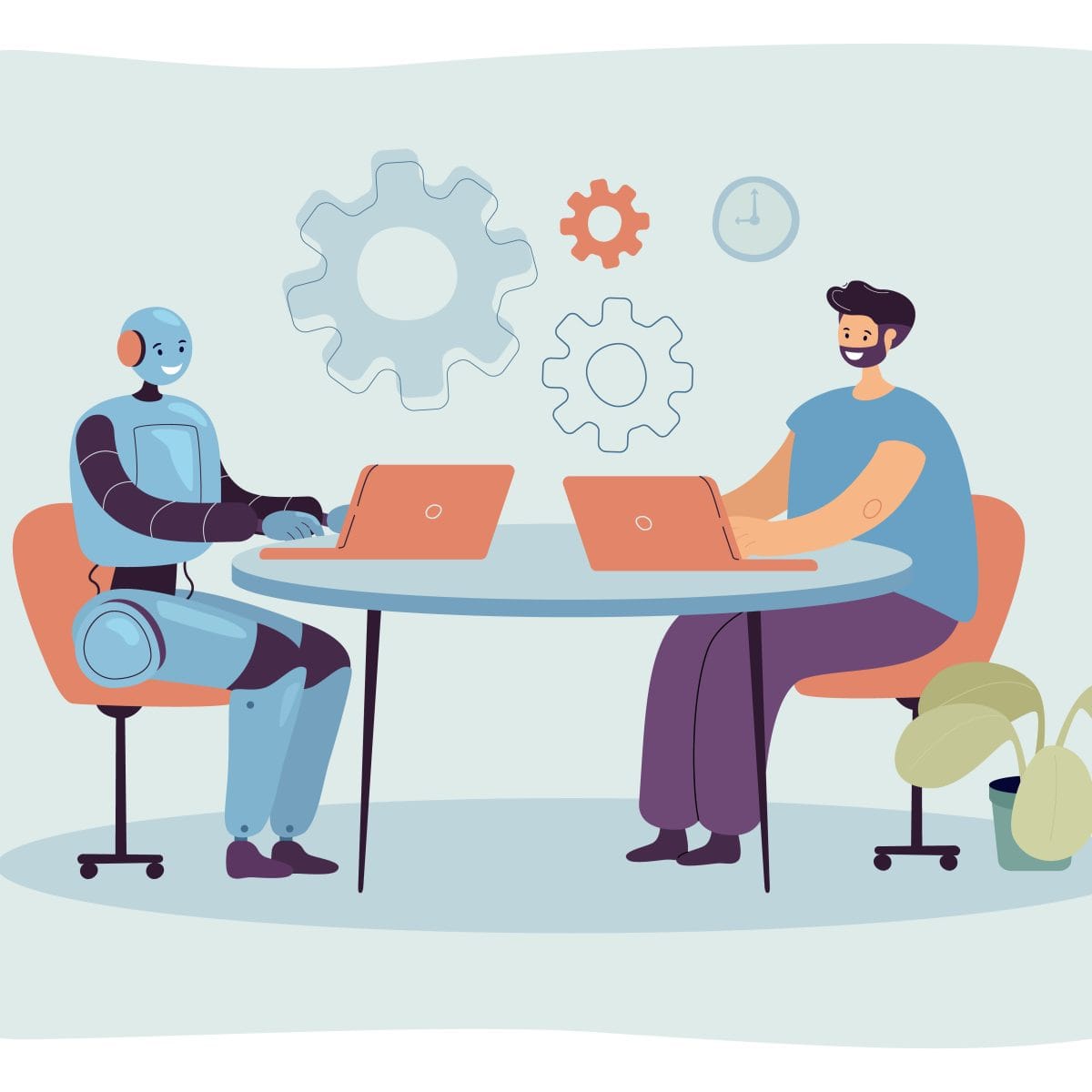
Looking forward, the safest path involves collaboration between AI and humans. Instead of replacing judgment, AI should augment human reasoning, offering data-driven insights while humans provide context and ethics.
AI’s future role in healthcare, finance, and governance will depend on how we manage these risks. Internal resources on AI creativity and AI’s role in transforming industries reinforce that the greatest value comes from AI-human partnerships, not one replacing the other.
Conclusion
AI decision-making is powerful but not inherently safer than human judgment. While it excels in speed, accuracy, and scalability, it struggles with context, transparency, and ethics. Humans, meanwhile, bring intuition and moral reasoning but are prone to bias and fatigue.
The safest future lies in synergistic systems where AI enhances human capacity while humans ensure accountability and ethical oversight. By balancing both, we can achieve decisions that are not only effective but also just and trustworthy.


